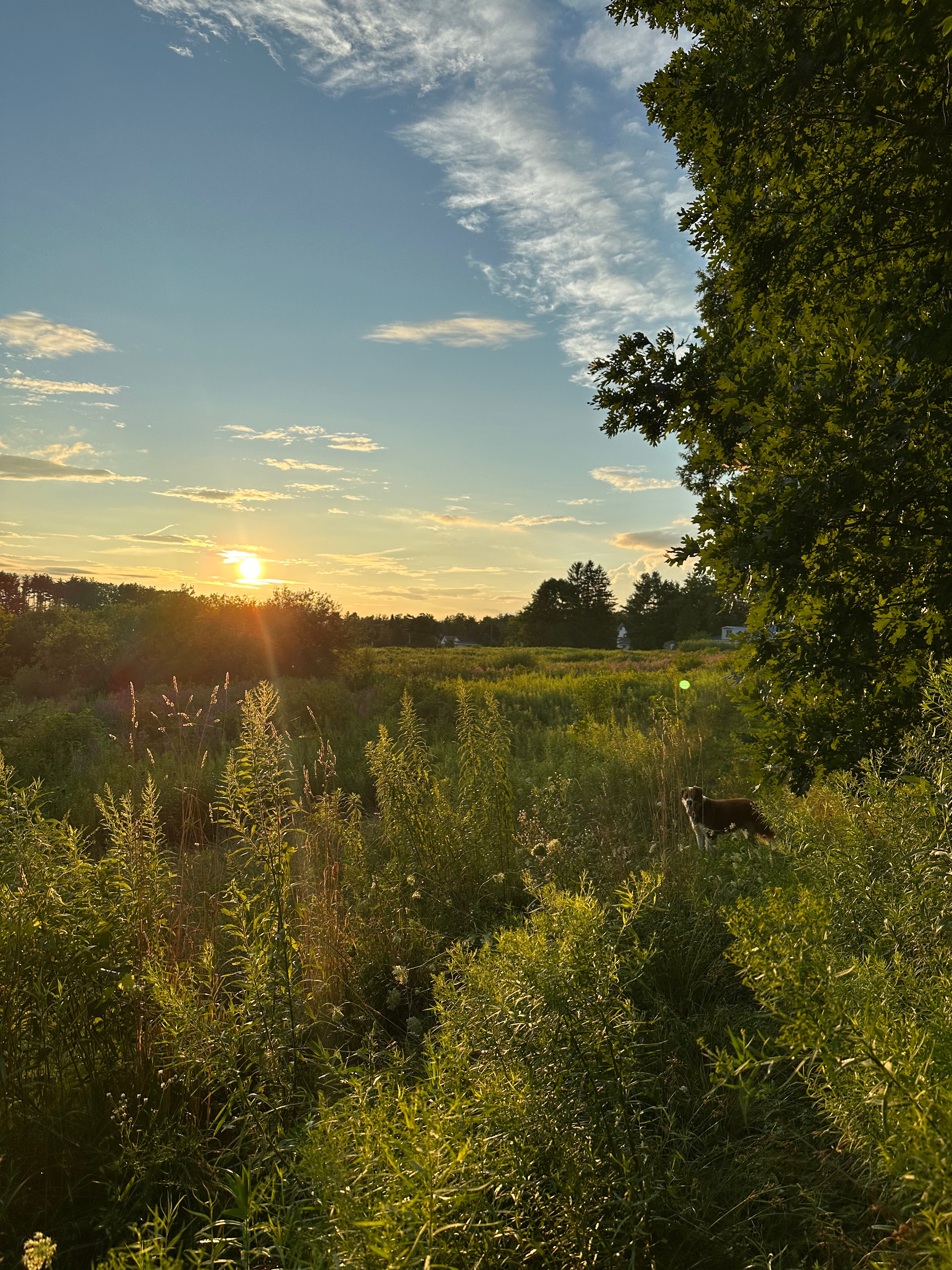
When we first moved to this little plot of land in Upstate New York, the overgrown cow pastures that made up the field behind our house seemed almost devoid of animal life.
In our first forays to explore it, we waded through densely growing goldenrod and gorgeous (invasive) purple loosestrife. Our clothes caught on (also invasive) Japanese honeysuckle, and we admired the deep maroon stalks of dogwood and willow. But where plant life abounded, we didn’t see much animal life. Jordan despaired over the lack of deer sign and sighed over the invasive species.

I felt sad too. What would it take, we both wondered, to bring this land back to life? To get rid of the invasive species, to help the native ones flourish and introduce a wider diversity of them, and to, ultimately, get to witness the vast array of animals that could make this landscape home.
Not much, it turns out. All we had to do was open our eyes to what was going on around us already–and to be patient. Nature doesn’t give up its secrets to the impatient.
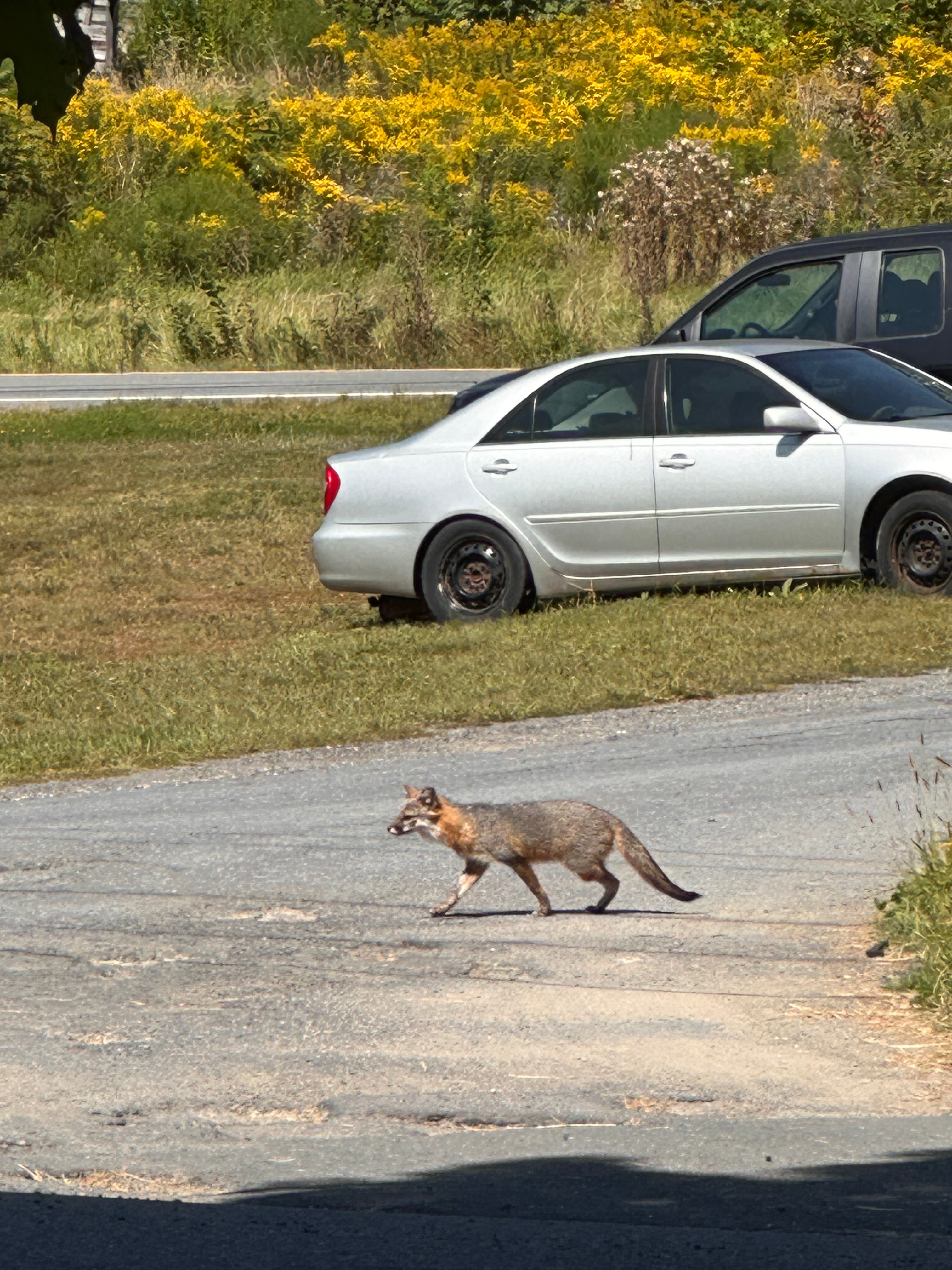
Within the first few weeks, we saw a three-legged grey fox hobble right down the street and then cut through our yard. Jordan and I were absolutely ecstatic–gray fox are increasingly rare, and neither of us had ever seen one in the wild. Not only that, but this one was three-legged, just like our own beloved three-legger, Wren. It felt like more than just a sign of the life on our land–but also a sign that maybe, just maybe, we were in the right place at the right time.
Since then, we’ve watched a red tailed hawk as it perches in the giant pines, oaks and maples that line our property, and then swoops down into the field to catch mice and rabbits (and hopefully stays away from our chickens). We’ve grown fond of the giant frog (I don’t know my amphibians well, so I’m not sure of the species), who lives in a puddle just off our property–to the point that H insists on checking for it every single time we go for a walk, even if the ground is covered in six inches of snow.
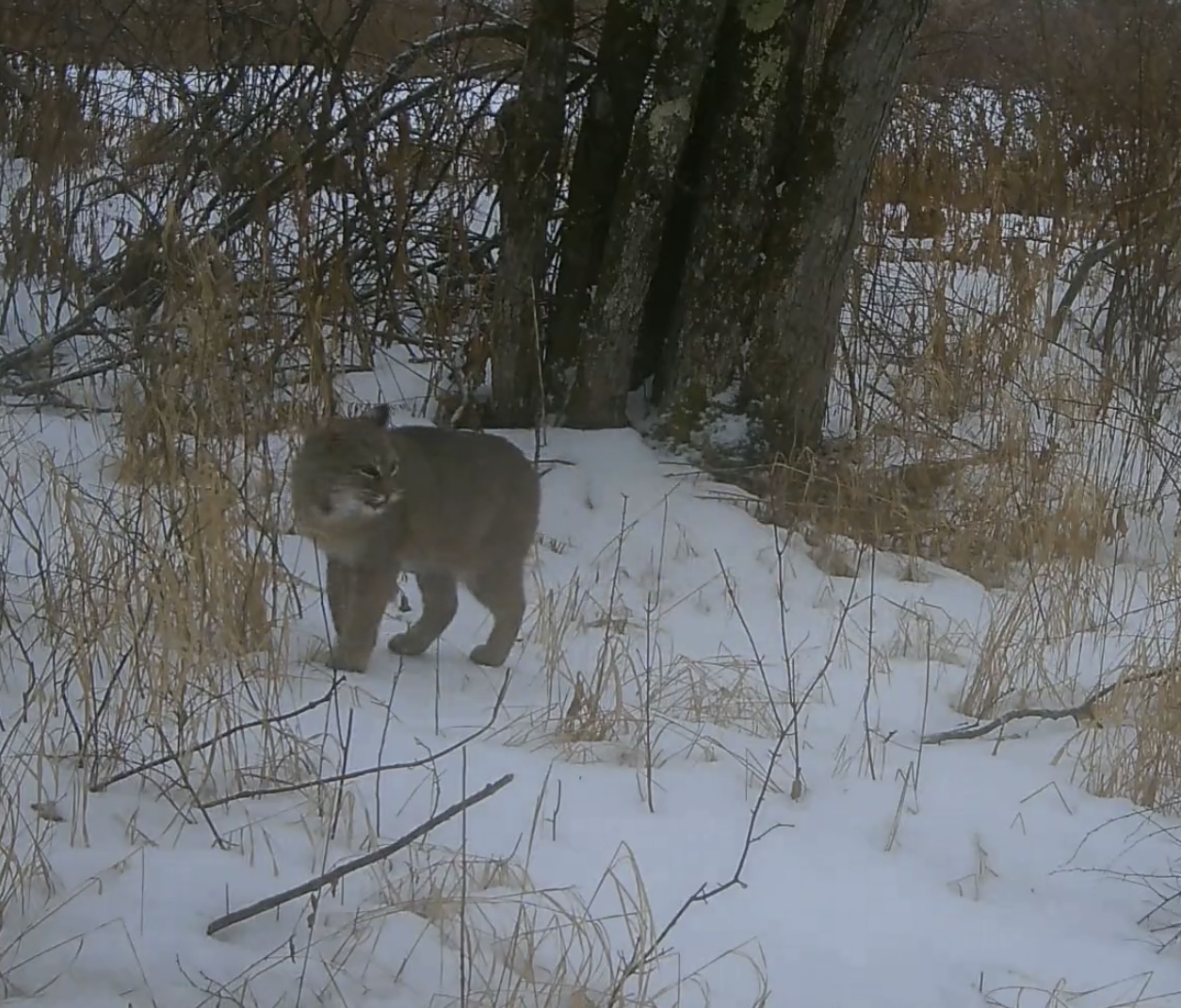
A few weeks ago, we watched as a bobcat stopped to nibble at a stalk of grass as it strolled by Jordan’s game camera. And just in the last few days, we’ve relished watching as migrating geese circle over our field in formation, spot our pond, and then gracefully drop into it at breathtakingly steep angles.
But even as we realized that our land held an abundance of life, we still talked about our habitat restoration plan. Honestly, there was no way we couldn’t talk about a habitat restoration plan. Not when you’re married to a wildlife biologist. So the plan, as it stood was this: reduce invasive species (not through herbicide use, because it freaks me out, but maybe through burning or manual removal, which probably isn’t very effective, but I dunno man), plant a whole bunch of trees around the edges of our property to provide cover and bedding habitat for critters, and create more food by disturbing the landscape (through burning or mowing).
Another strategy that wildlife managers use is to pick a goal species to manage the land for–a species that would be well-suited to the habitat that historically existed. Looking at our combination of upland field, lower lying wetland, pond and willow brush, Jordan settled on the woodcock.
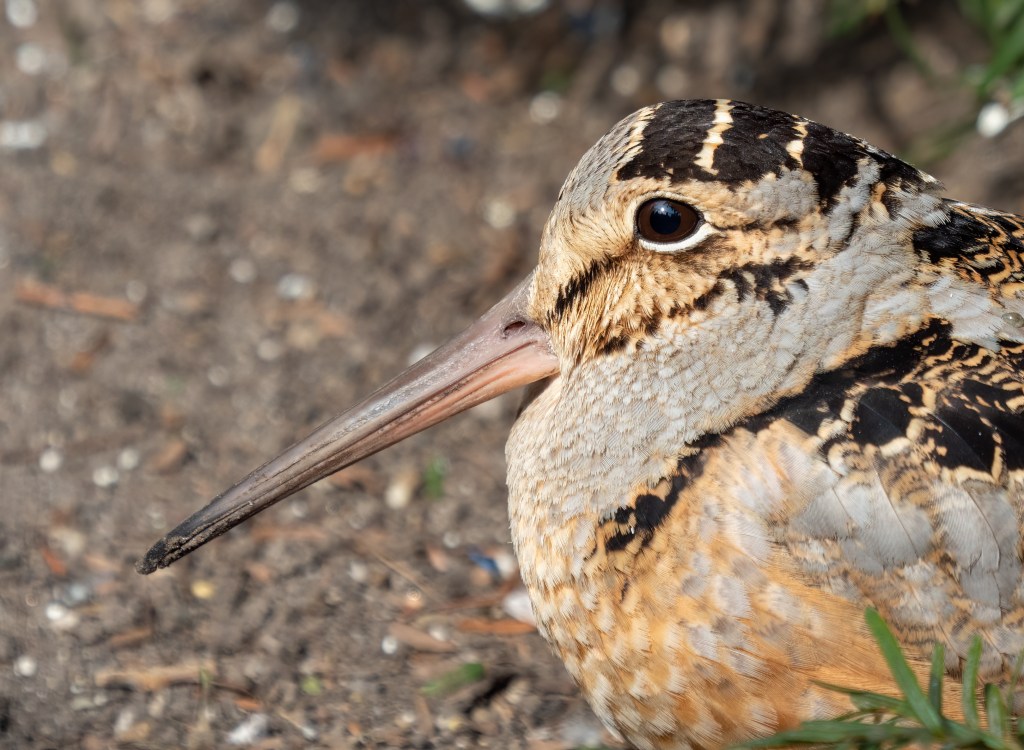
Woodcock are squat, plump little birds with bizarrely shaped heads and very long bills. They almost look like a little kid drew a bird, instead of like an actual bird. To add to their charm, the males also make a buzzy little fart noise during their mating season, before they shoot up into the sky and whiz around–which you can hear, because their wing feathers make a whistling noise. The Cornell Lab of Ornithology says to look for woodcock in old fields, near forest edges, and within forests–depending on the time of year.
For the last six months, I’ve been hearing a lot about woodcocks–or as Jordan affectionately calls them, Timberdoodles. Mainly what we have to do to our land to attract them to it.
And then, the other night, Jordan came into the house after grabbing wood from our barn, and told me that he thought he just might have heard a woodcock! It wasn’t on our land, he explained, but he was pretty sure he’d heard a funny little fart sound from across the street.
Thankfully, our good friend Jared, who’s an ornithologist, visited only the next day. We hung out in the backyard all afternoon, and then around dusk, Jordan explained his hope–that he had heard a real live woodcock near our property. While I put the littlest down for bed, they went out tromping.
They came back ecstatic. Not only was there a woodcock across the street, there was a definite woodcock in our once-thought-to-be-barren field. I was already snuggled up by the fire with my knitting, but after putting the two other littles down to bed, they tromped back outside with a flashlight, hoping to sneak up on the woodcock as it did its mating dance in the field, and then watch as it shot up into the sky to whiz around.
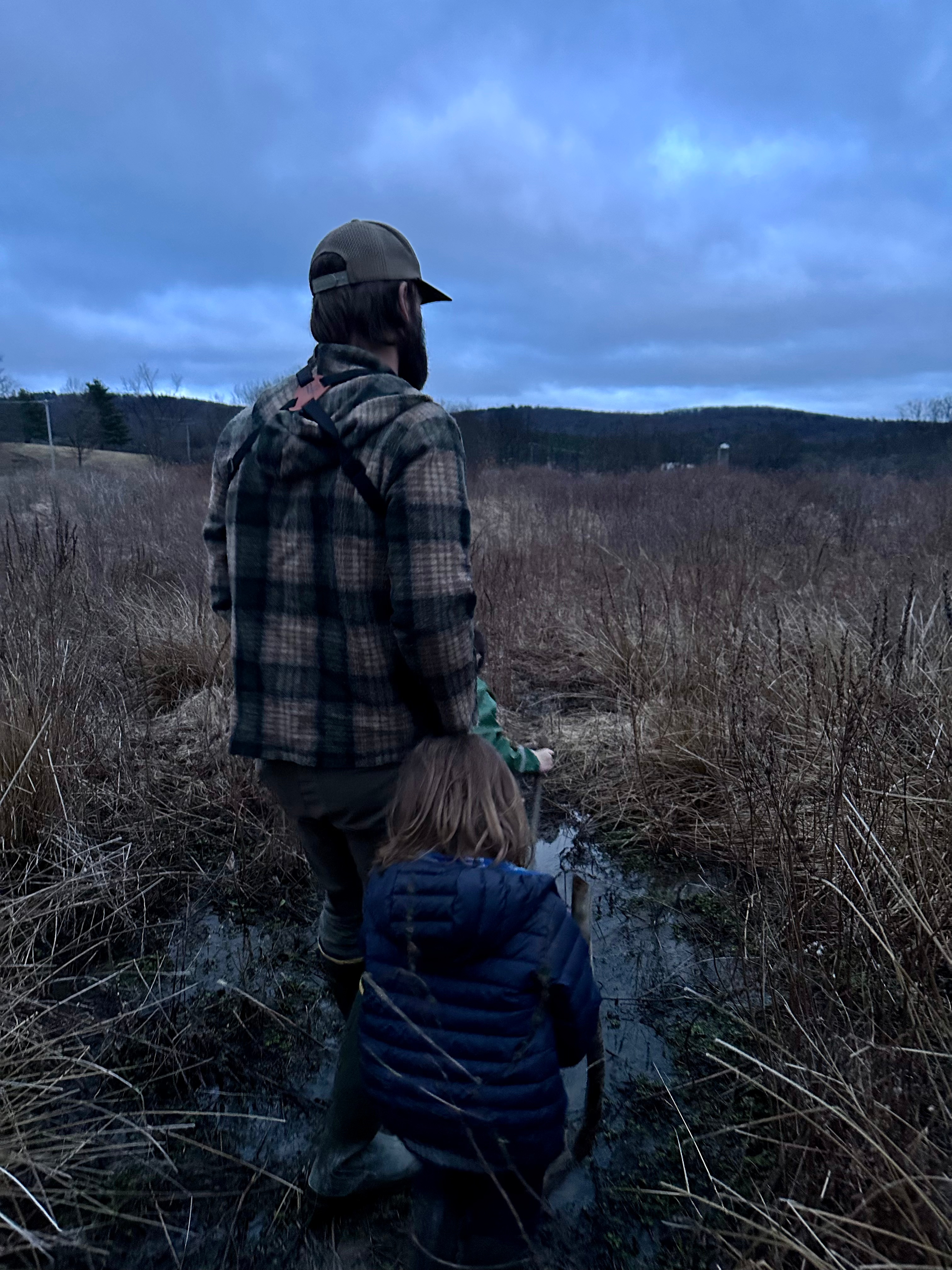
The next night after dinner, Jordan got the kids dressed up in coats and boots. “You coming?” he asked me as he trooped them out the door. I wavered. The fire was beckoning, and the sky outside was an uninviting slate gray. Not to mention the tick check I’d have to do after our adventure. But then I thought about how excited Jordan had been the day before–and how good it always felt to get out onto our land, and how sad I’d be to miss the kids seeing the woodcock for the first time. So I pulled on my boots, and tromped after my boys.
L was feeling feisty, and led the charge into the field while brandishing a big stick. Jordan followed him, silent in the brush. And I held H’s hand and we dragged behind, carefully sidestepping prickers. Already, dusk was draping itself over the landscape, and the colors were beginning to blend together in a subdued mix of grays and purples and browns.
We hadn’t seen anything yet, but I was already glad that I had come.
When we got to the first swell of land in the field, Jordan signaled for us to stop. I listened carefully, but my ears filled with a chorus of spring peepers, of the honks of geese down on the pond, of the tangled chorus of dozens of other birds.
“I think I heard one,” he whispered. We all paused, listening carefully–except L, who brandished his stick at the grass. “There!” said Jordan, pointing. “One just landed, right there!” His levels of excitement rivaled six year old boy on Christmas morning.
We all stared at the darkening field. “And there’s the flight sound! Do you hear it?” He turned to me, tracing something invisible in the sky with his pointer finger.
I held my breath, listening, but all I could hear was what sounded like a suddenly angry goose, and all my eyes could detect in the sky were the vast, heavy hanging clouds. I was beginning to wonder if woodcock were mythical. If perhaps I ought to be looking in the same spirit with which I looked for fairies, after L and H had built fairy houses.
And then, a tiny piece of black detached itself from the sky and hurtled down to the ground. I gasped, and pointed. “It’s right there!” This time, with my eyes on the spot where it’d landed, I could distinctly hear the farty buzz Jordan had talked so much about. We all rushed forward, closer, and I heard the whistle of its wings as it took off again.
Another speck fell from the sky, and another bird buzzed off in another direction, and we heard the simultaneous whistle of wings. When two woodcock flew by above us at once, we all gasped. It turned out that not only did we have one woodcock in our old field–we had an abundance. This is especially amazing because woodcock have been declining for the last few decades, making them a species on the conservation watch list.
For twenty minutes, we all watched, spellbound, as the woodcock around us followed their bizarre, gorgeous rhythm of dancing in the open spaces of field, and then taking to the skies to twirl and flitter, the sound almost like a jerky panpipe.
But the part that struck me most was the way they pelted to the ground. It felt like being surrounded by falling stars, except the birds were black against the barely lit sky, instead of glowing. It wouldn’t have been any more amazing to me either way–it felt magical enough to wish upon.
After we’d watched for awhile, H began to get cold and tired, and so we reluctantly turned around, and trooped back through the field to our house, windows glowing through the trees. For once, I didn’t even mind the rush of traffic that I could hear just beyond it, because how amazing–to have such an amazing variety of life just off a busy road. To see how resilient and beautiful and strange the natural world is, even in the face of human ignorance and persistence.
We’re not going to abandon our restoration plan, but it turns out that perhaps the land didn’t need us so much after all–that the mistake that humans so often make is to discount the abundance that lies right in front of them.
 Feathery Thoughts
That is so exciting!!! We’re going to start our invasive species remediation this spring. We’ve got better tools for the job now. We’ve got Japanese Knotweed in our yard. We aren’t at a monoculture level yet and we want to start keeping it in check!
So fun!!! You’ll have to keep me posted on how it goes.
absolutely!